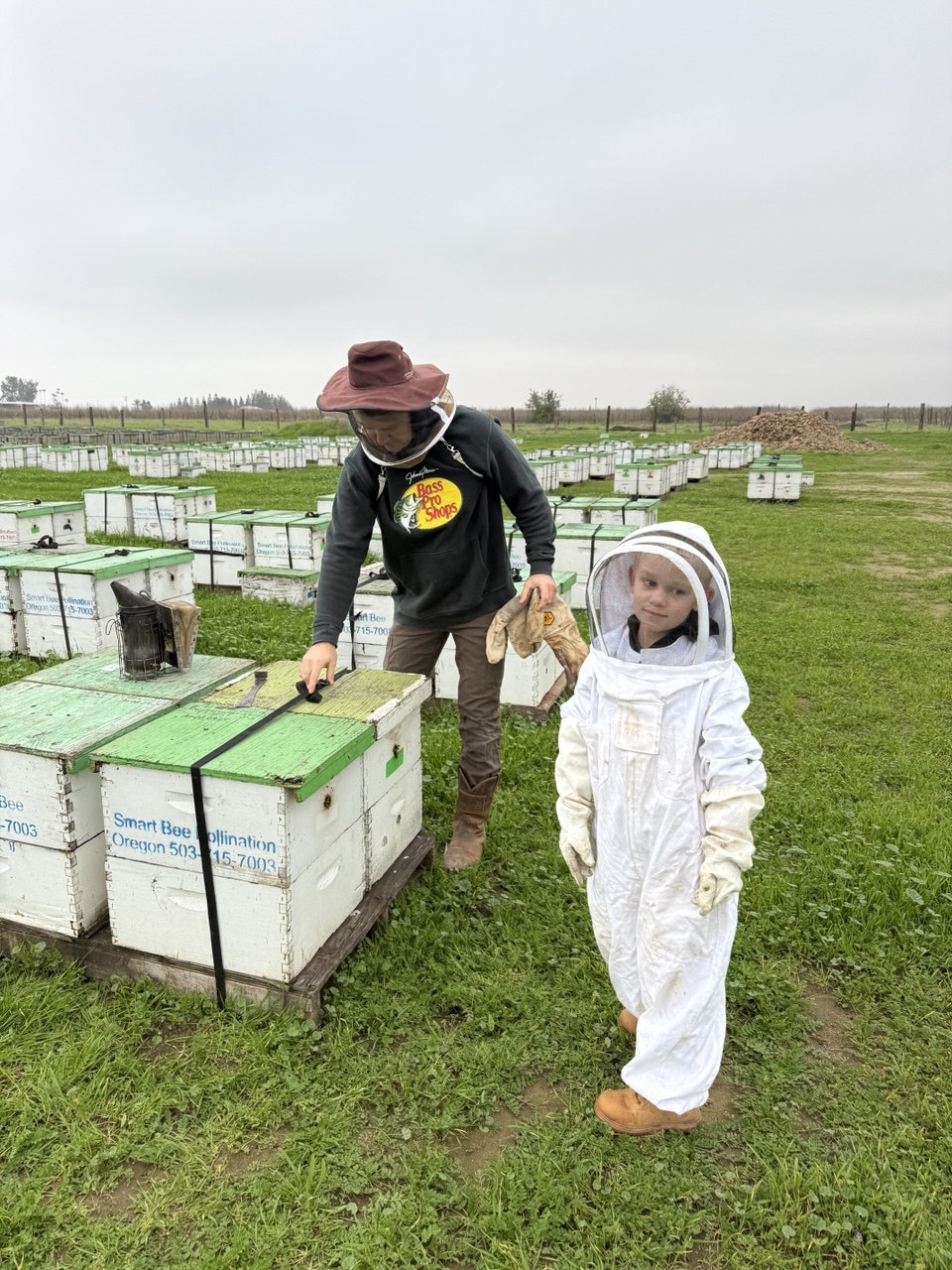
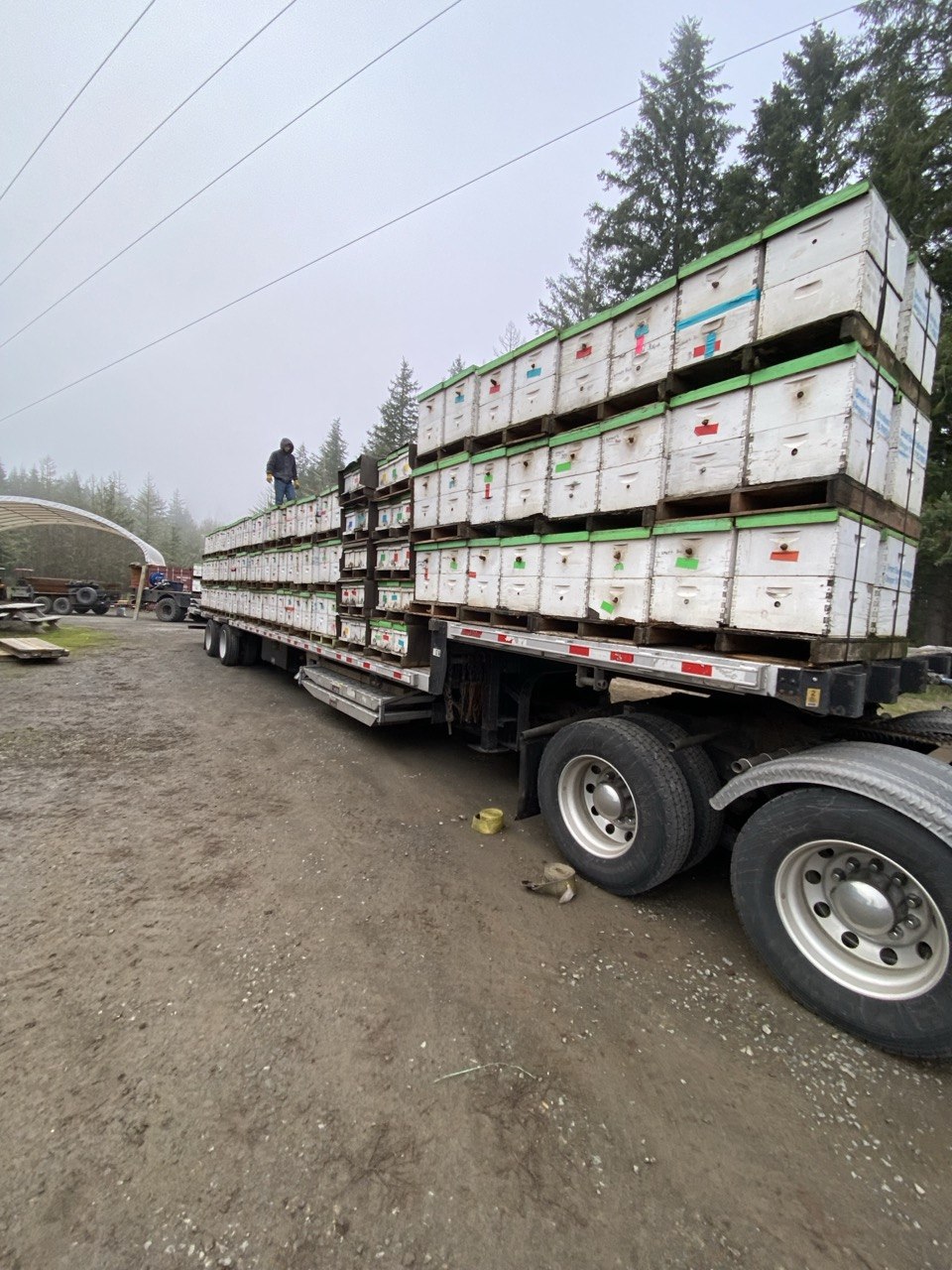
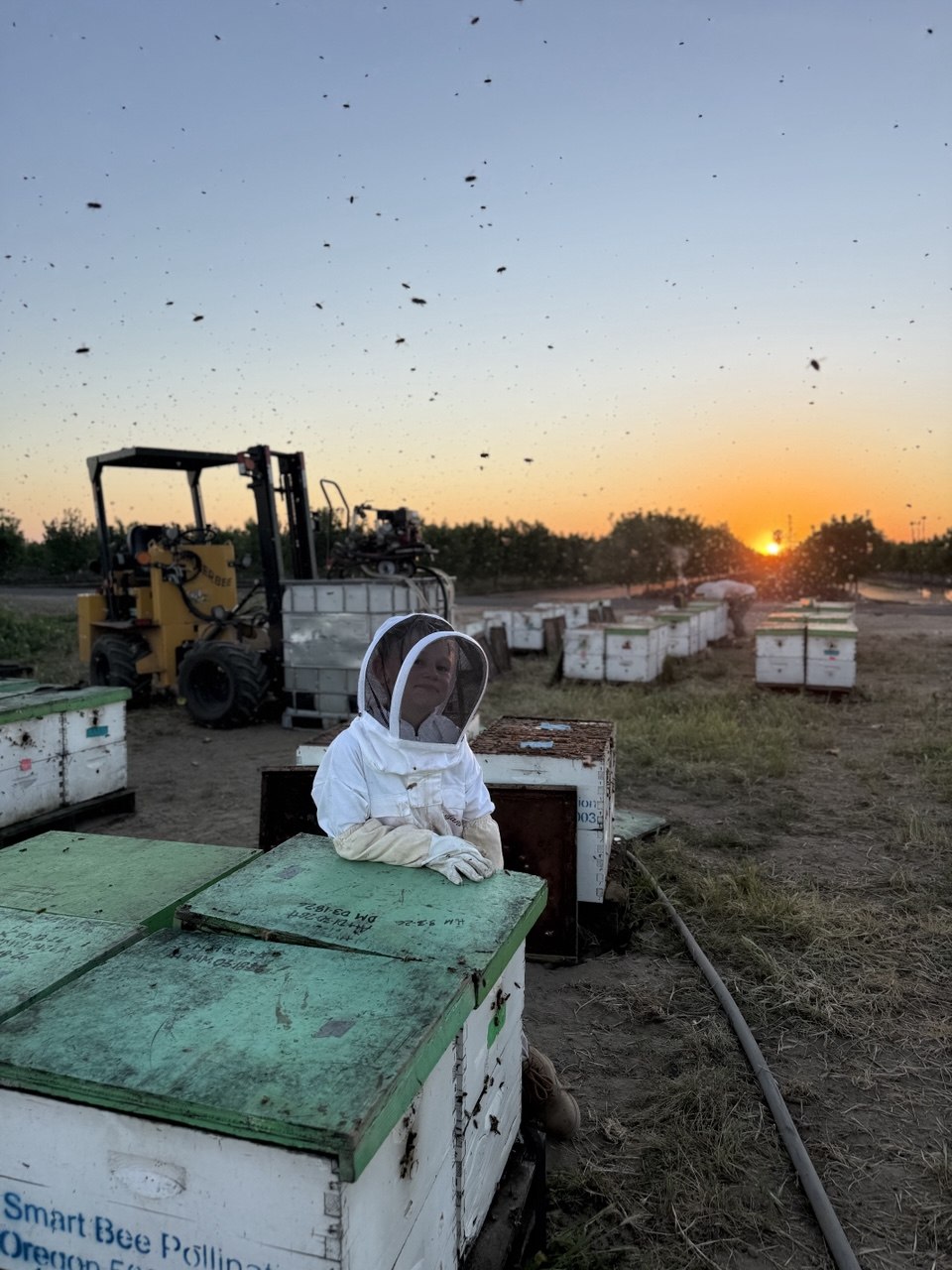
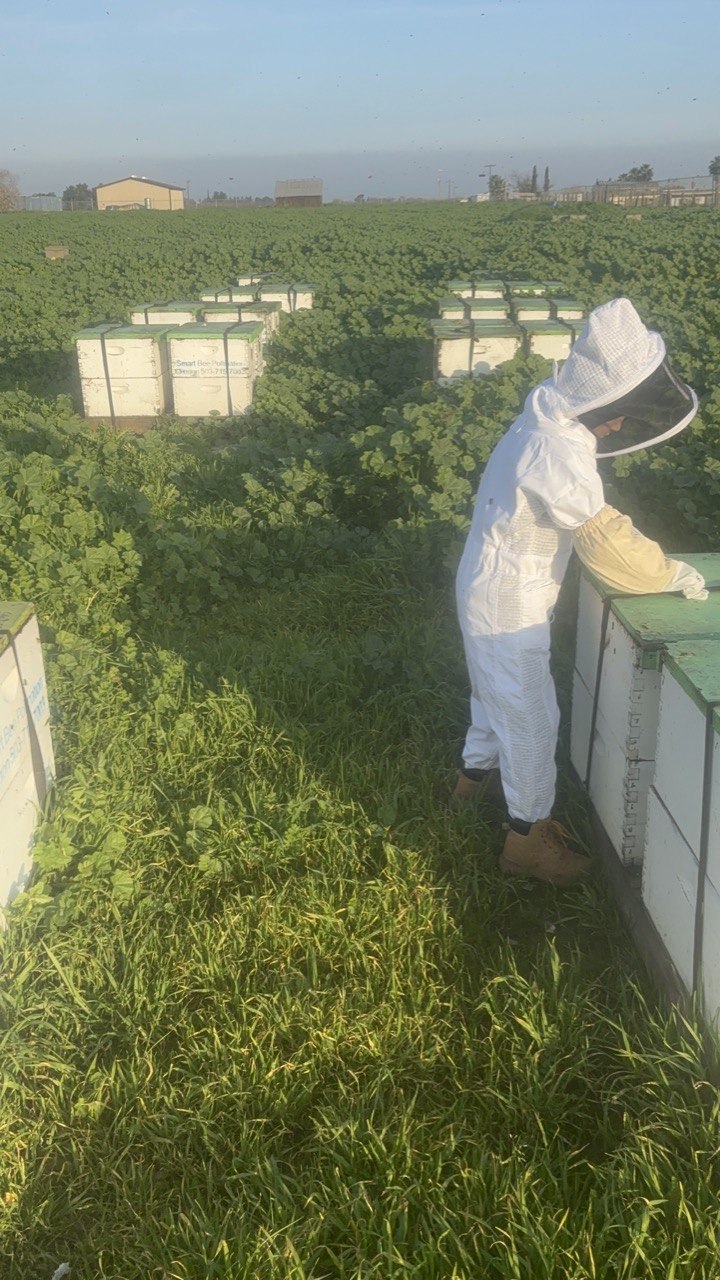
Our son by a trailer loaded with hives, ready to move.
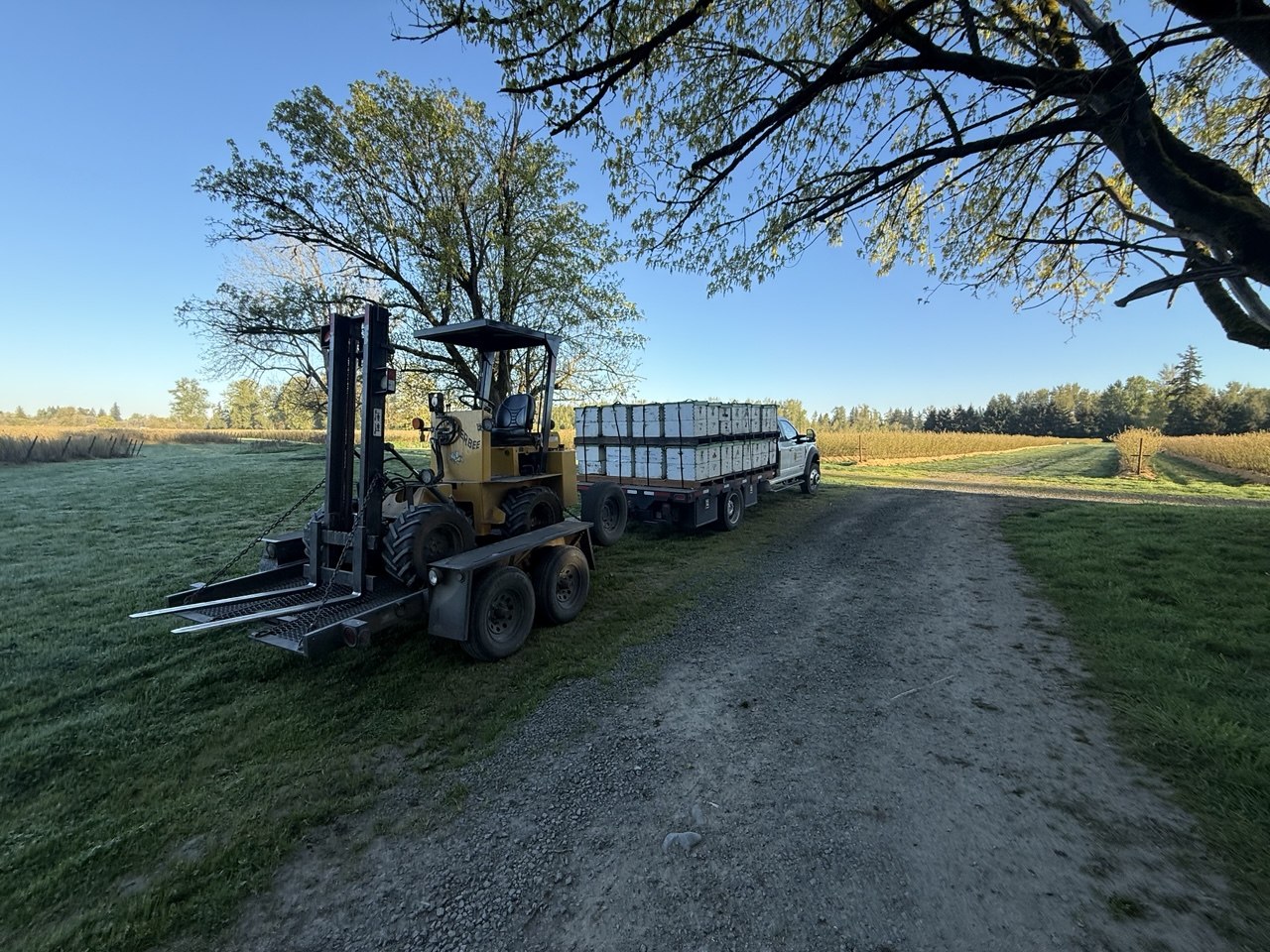
Every February we load the hives onto a trailer and drive them down to California's Central Valley to pollinate almond orchards. Six weeks of work in the almonds, a paycheck to help cover the year, and then the long drive back home to Oregon.
This is what bringing them home looks like. 360 colonies, stacked tight, strapped down, ready for the Willamette Valley summer.
Spring · Inside a hive
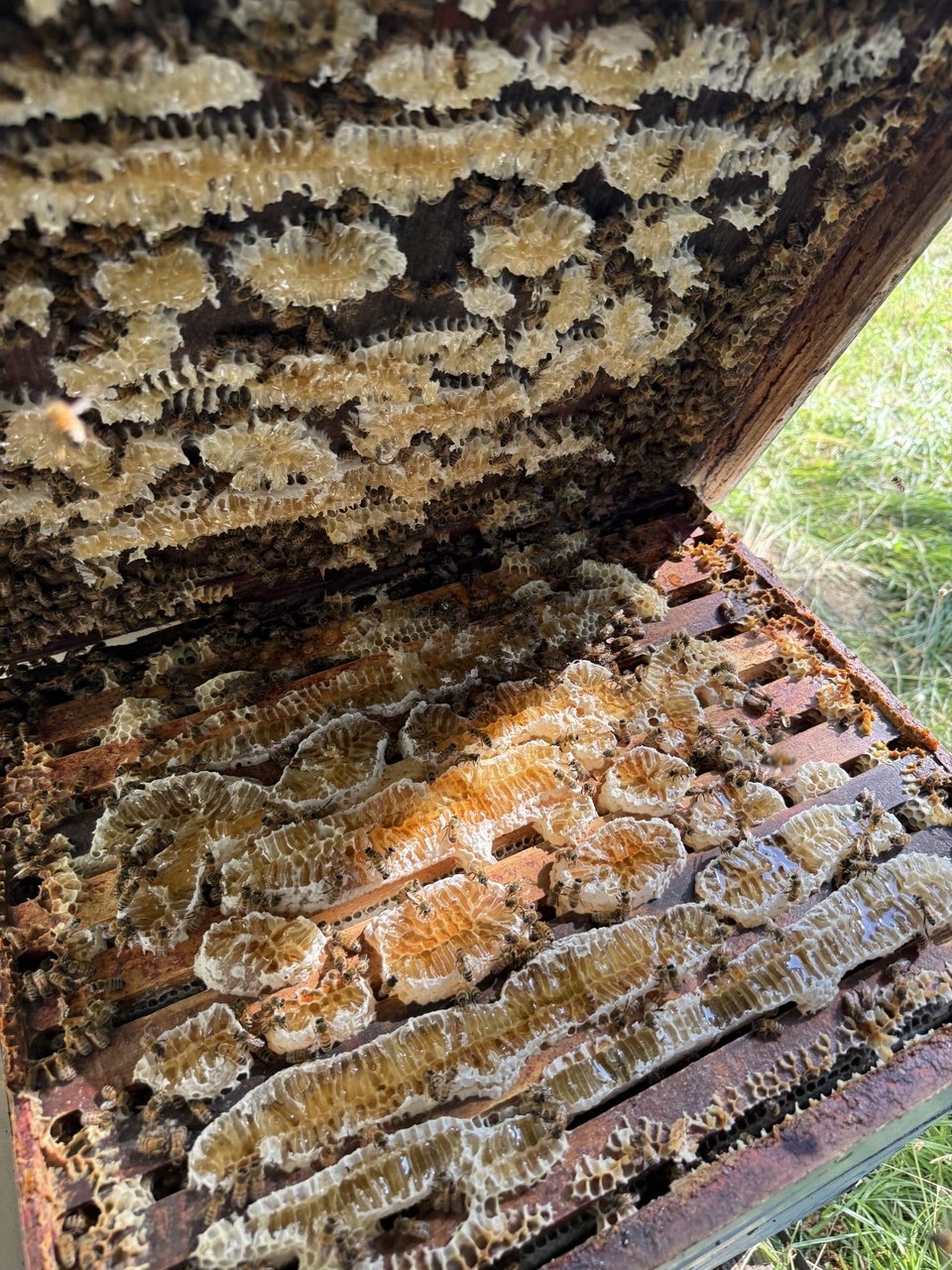
What real honeycomb looks like
The bees doing what bees do.
People ask what makes "raw" honey different from the stuff at the grocery store. The short answer: this.
Grocery honey has usually been heated to 160°F and micro-filtered to give it a clean, consistent look — that process kills the enzymes, strips the pollen, and makes it shelf-stable in a warehouse. Raw honey is what you get when you skip all of that. What the bees made, in the jar.
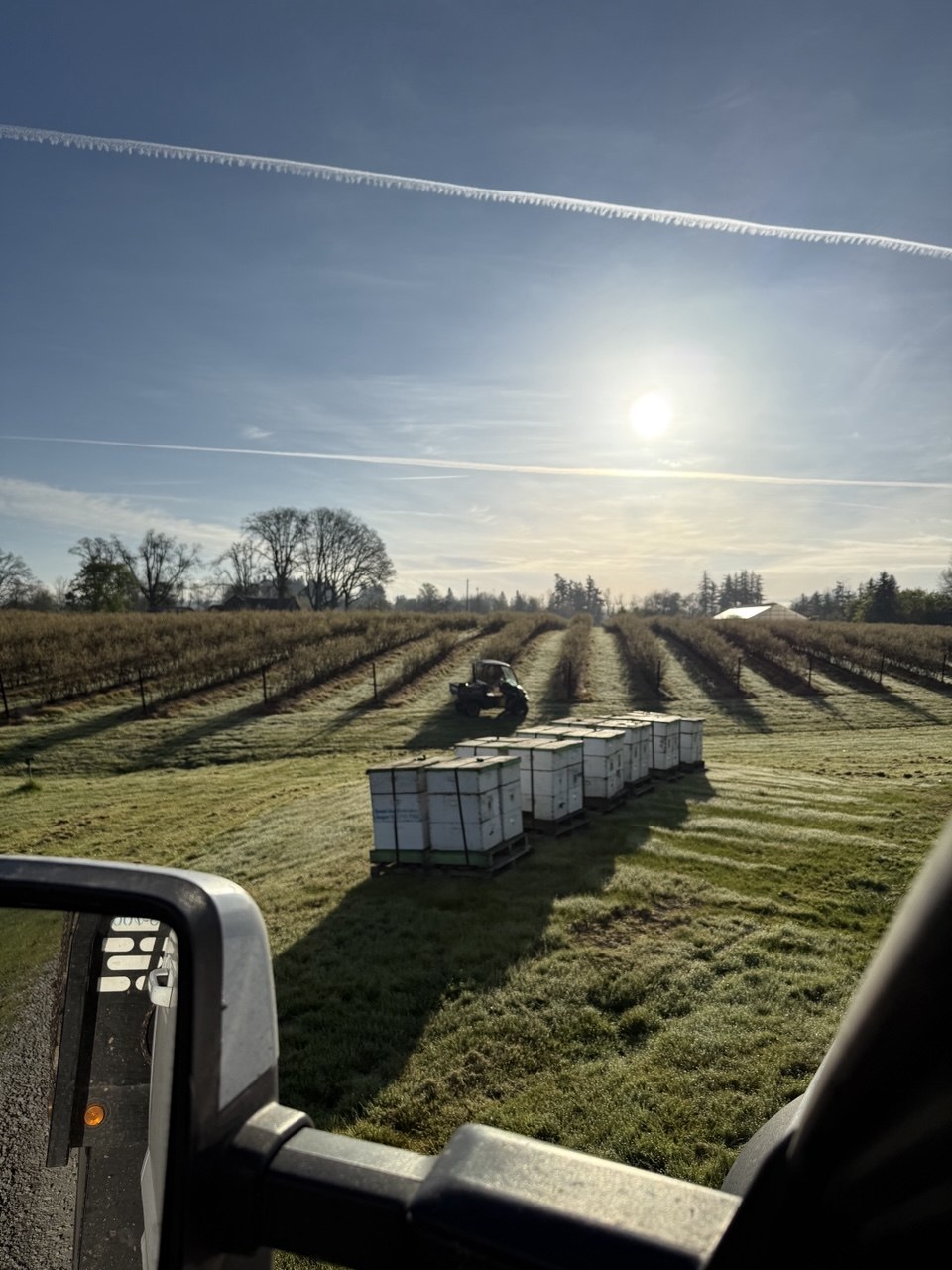
Early morning · Apiary
Why we smoke
Our son with the smoker on the nucs.
Bees read smoke as "forest fire — grab the honey and get ready to leave." So when we crack open a hive to inspect, pull frames, or move a colony, we puff cool smoke across the top. The bees get distracted eating honey, stop paying attention to us, and we get our work done without anyone getting hurt — bee or human.
It's the same tool every beekeeper for a thousand years has used. Our son's loved running the smoker for as long as we can remember.
Harvest week
Pulling honey supers
A super full of honey and bees.
A "super" is the top box of a hive — the one the bees fill with surplus honey once their brood chamber below is set. When it's capped (the bees have put a wax lid over each cell), we pull it, brush the bees off, and take it to the extracting room. Frames go in a centrifuge, honey spins out, strained through a coarse filter to catch wax — and into the bucket.